Bostan
The Satanic VersesBostan, the Boeing 747 operating as Flight AI-420, carries the novel between two radically different states: a hundred and eleven days of hostage captivity and a final passage over the English coast that ends in explosion. The aircraft is not merely the setting for these events. Its designation, confinement, and destruction bind a political crisis to the extraordinary survival of Gibreel Farishta and Saladin Chamcha, while leaving the cause of their deliverance unsettled.
Identity and Narrative Function
The plane is identified as a jumbo jet, a Boeing 747 named Bostan after one of the gardens of Paradise, rather than Gulistan. Its name carries an image of imagined refuge, but the aircraft becomes a place from which escape is not available to the passengers. That contrast gives the object a stark role in the plot: the promise suggested by its name is set against an extended ordeal and, finally, against the loss of the plane itself.
The novel introduces the disaster in the language of a beginning. Bostan breaks apart high above a brightly illuminated city, and a blip disappears from radar as bodies descend toward the sea. The narration then returns to the designation Gibreel has given the place below: Proper London, capital of Vilayet. The movement from a universal-sounding catastrophe to a particular city makes the airliner’s destruction a threshold between the journey through the air and the survivors’ arrival in England. Its wreck is also the point around which the novel’s competing accounts of what happened begin to gather.
Hijacking and Captivity
Before its final approach to England, Bostan is seized by four armed hijackers, three men and one woman. Once they force the pilot to land, the aircraft comes down not at an international airport but at a huge runway built for a local sheikh beside a desert oasis. A six-lane highway runs to the site; in ordinary circumstances young people cruise along it, but the plane’s arrival brings armoured cars, troop transports, and limousines carrying flags. The same landscape that had served as an extravagant private amenity becomes the perimeter of an international standoff.
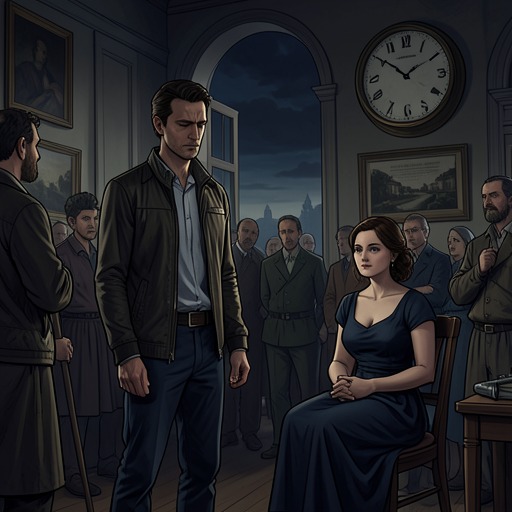
The passengers remain aboard for one hundred and eleven days. Diplomats debate whether to storm the aircraft or concede to the hijackers, while the passengers bear the consequences of decisions made outside it. The initial crisis is described as tense and volatile: the hijackers are alert, the children scream, and fear spreads through the cabin. The captors are not masked; they are described as handsome and as performers who have become stars on their own stage. Three take the names Dara Singh, Buta Singh, and Man Singh; the woman is Tavleen. As the stand-off continues, a great stillness settles around the aircraft and mirages begin to appear. Bostan’s suspension between desert runway and uncertain political resolution thus becomes a suspension of ordinary reality as well.
Final Flight and Destruction
The aircraft is eventually tracked over Europe in winter, passing above the Alps and France toward England’s coastline. Radar follows it and radio messages ask whether it wants permission to land, but no permission is requested. Bostan circles the shore like a sea bird while its fuel indicators fall toward zero. The approach offers the possibility of landing without confirming that the plane will do so; the aircraft remains in motion, visible to those tracking it but not brought under their control.
A fight breaks out among the hijackers. Man Singh attacks Tavleen, and she kills him with a knife. Buta Singh and Dara Singh then rush at her, but Tavleen pulls the wire connecting the grenades concealed beneath her gown. Bostan explodes. The narrative abruptly recasts the apparent ending as a birth, setting destruction beside the possibility of a new life rather than treating the crash as a simple conclusion. The reversal does not undo the catastrophe: the aircraft has broken apart, and the surviving passengers are left to make sense of an event whose final act has joined violence, flight, and an unexplained escape.
Survivors and Uncertain Agency
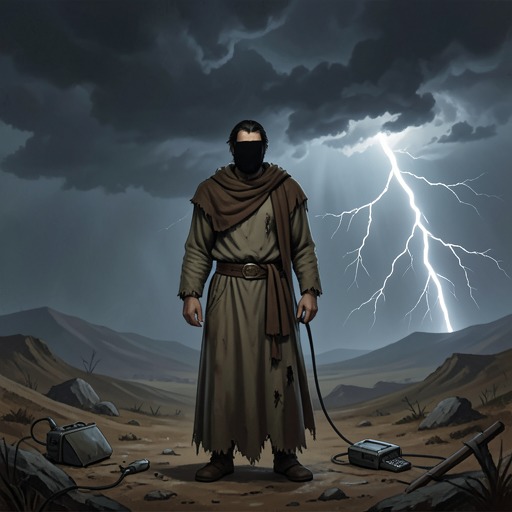
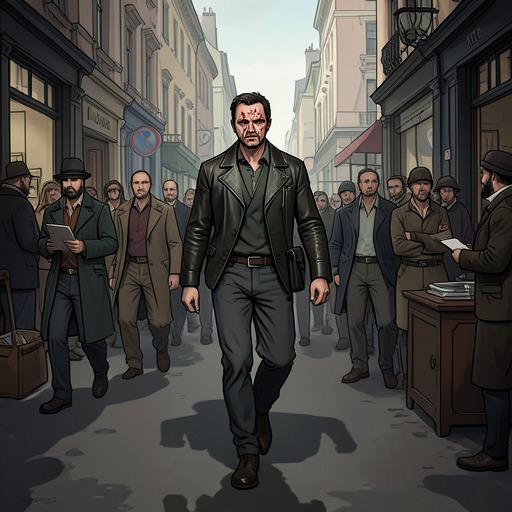
Gibreel Farishta and Saladin Chamcha are the only passengers to survive the wreck. During their descent, Gibreel flaps his arms and sings a song in a language he does not know to a tune he has never heard. The two slow as he sings and flaps, eventually floating toward the English Channel. Gibreel later insists that the song was celestial and that without it they would have struck the water at fatal speed. Chamcha rejects the claim that they walked upon the water; after they are found on a beach, he describes their survival as luck.
The narration offers another explanation without dissolving the disagreement: it declares that Chamcha willed the outcome and Farishta did what was willed, then asks which of the two was the miracle worker. The aircraft’s destruction therefore leaves more than physical wreckage. It creates a problem of interpretation in which Gibreel’s account of song and miracle, Chamcha’s appeal to luck, and the narrator’s claim about their respective agency remain in tension. Bostan’s last journey is decisive precisely because it carries the novel’s protagonists out of a shared disaster while refusing to make their survival—or the power behind it—fully explicable.